
When “Final Reporting” is Just the Beginning
May 26, 2026 | Creative Economy, ALberta, MusicOur Steps for Going Beyond Recording Stats
What happens when a project’s final report is filled? For many programs, that’s where the story ends; wrapped up in audit requirements and accountability measures. While we appreciate reports are a key tool (and we’ve written our fair share), we also know that real community impact rarely falls “within 30 days of project completion.”
At Bird Creatives, we work with partners, funders, and communities to design and manage programs that move the needle on what matters most. As we always look for ways that maximize impact in our creative communities, we’ve learned that some of the most meaningful outcomes show up long after the paperwork is done.
Capturing Impact After the Paperwork is Done
Last year, on behalf of our client West Anthem, the Bird Creatives team managed the Alberta Music Cities Grant Program. With funding from Alberta Music and Calgary Arts Development, we designed a flexible, one-off grant program where applicants tied their experimental music projects to specific strategic priorities (as seen in West Anthem’s Resonant Energies strategies and the Rural and Small Cities Toolkit).
Music Cities Grant Program banner
We facilitated a community jury which disbursed $76,350 in funding to nine experimental projects. Between March and December 2025, these experiments involved 272 musical artists/musicians, 148 industry professionals, 26 venues, 32 businesses (hired, partnered, sponsored, etc.), and 33 non-profits and charities. Over 3,500 music fans got more live music and an additional one million unique Spotify listeners were exposed to Albertan talent.
Let’s zoom in for a closer look at one of those experiments; Edmonton-based artist, Jyn-Ting Ying, proposed a concert series featuring traditional instrumentalists in nontraditional spaces around Edmonton's Chinatown and area. After five (5) shows in five (5) different businesses, Jyn-Ting submitted a final report a month after the last event with the final budget, attendance numbers and a note mentioning businesses seemed interested in more hosting opportunities.
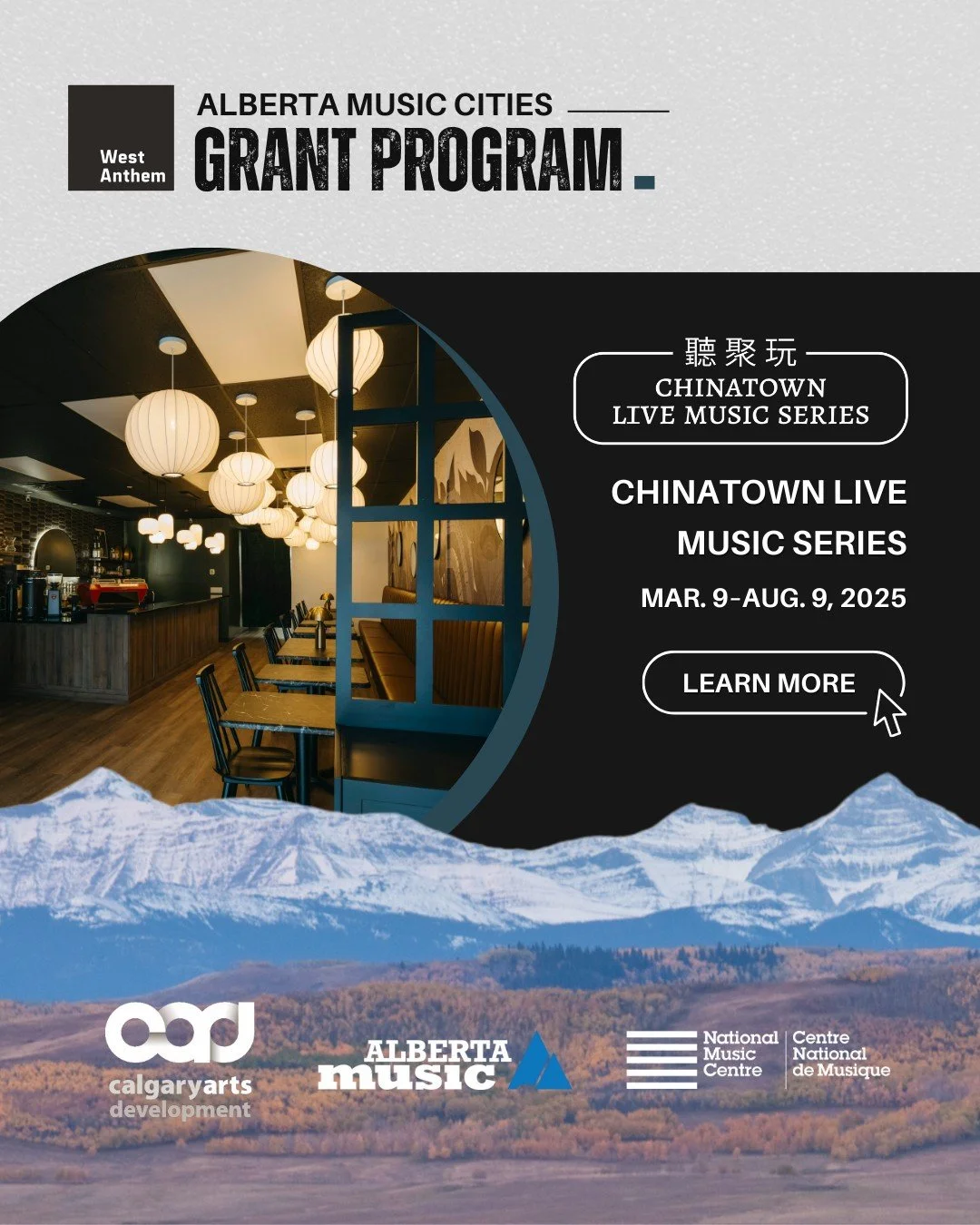
Chinatown Live Music Series by Jyn-Ting Ying
End of story. Except… it’s not.
In April 2026, a member of our team noticed a local news story mentioning a familiar venue from a final report she’d reviewed. So she made a few phone calls and made some happy discoveries…
Jyn-Ting’s project helped produce the first live music event in June 2025 at Paper Birch Books, a little local new and used bookstore located in Edmonton’s McCauley neighbourhood. According to co-owner Céline Chuang, the event opened their eyes not only to how the space could be used, but also to the local interest in such events. Paper Birch Books then ran a second event and artists began to approach them. Tony Flanagan, of Pocket-Sized Series, heard from a friend “they host events there” and, after a quick visit, decided Paper Birch Books would be an ideal location for a six-month partnership. Inspired by the well-known NPR Tiny Desk series, the Pocket-Sized Series takes advantage of the picturesque book-lined walls to create a unique acoustic setting in which unamplified artists play to locals while the team captures high-quality marketing videos that artists can use to secure work elsewhere.
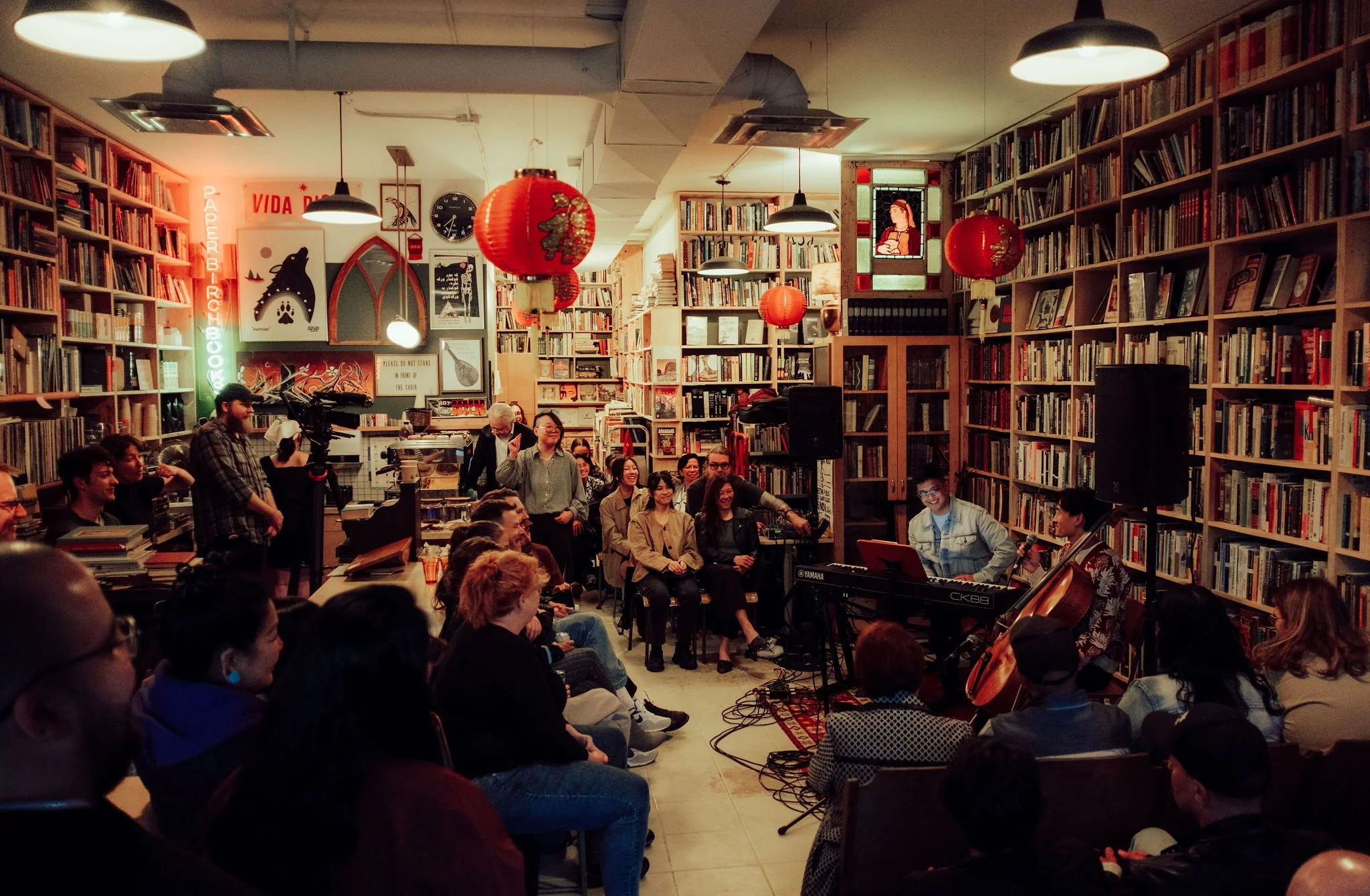
Live music event at Paper Birch Books (Nicholas Yee).
Photo by Jordon Hon
“Hosting live music has helped us connect with new customers and build rapport with new aspects of the local arts community. It's helped us expand the use of the space, added a dimension of gathering and connection, and drawn in people who first encounter the bookstore as a venue, then return to experience it in full.” – Céline Chuang
This collaboration offers a compelling case study of live music in non-traditional spaces. Live entertainment draws locals to Paper Birch Books, the business benefits from increased foot traffic and community engagement, locals enjoy free entertainment, and emerging artists walk away with high-quality assets.
Still not the end of the story.
Seeing the impact at Paper Birch Books, our intrepid team member did a bit more digging. Jyn-Ting had also partnered with the recently opened Boa & Hare located in the Pacific Mall. While the space had already hosted live music, Jyn-Ting’s event drew a larger crowd than ever before. Boa & Hare’s co-founder, William Chen, called the event massively successful because “it opened people's eyes to what Chinatown could become." Since the event, more artists have reached out; William credits Jyn-ting for highlighting Boa & Hare’s free performance space (no minimum spend and no booking fee). “I definitely believe Jyn-Ting and their network helped get the word out,” said William. With this activity, they are also seeing artists return and consider ongoing jam sessions.
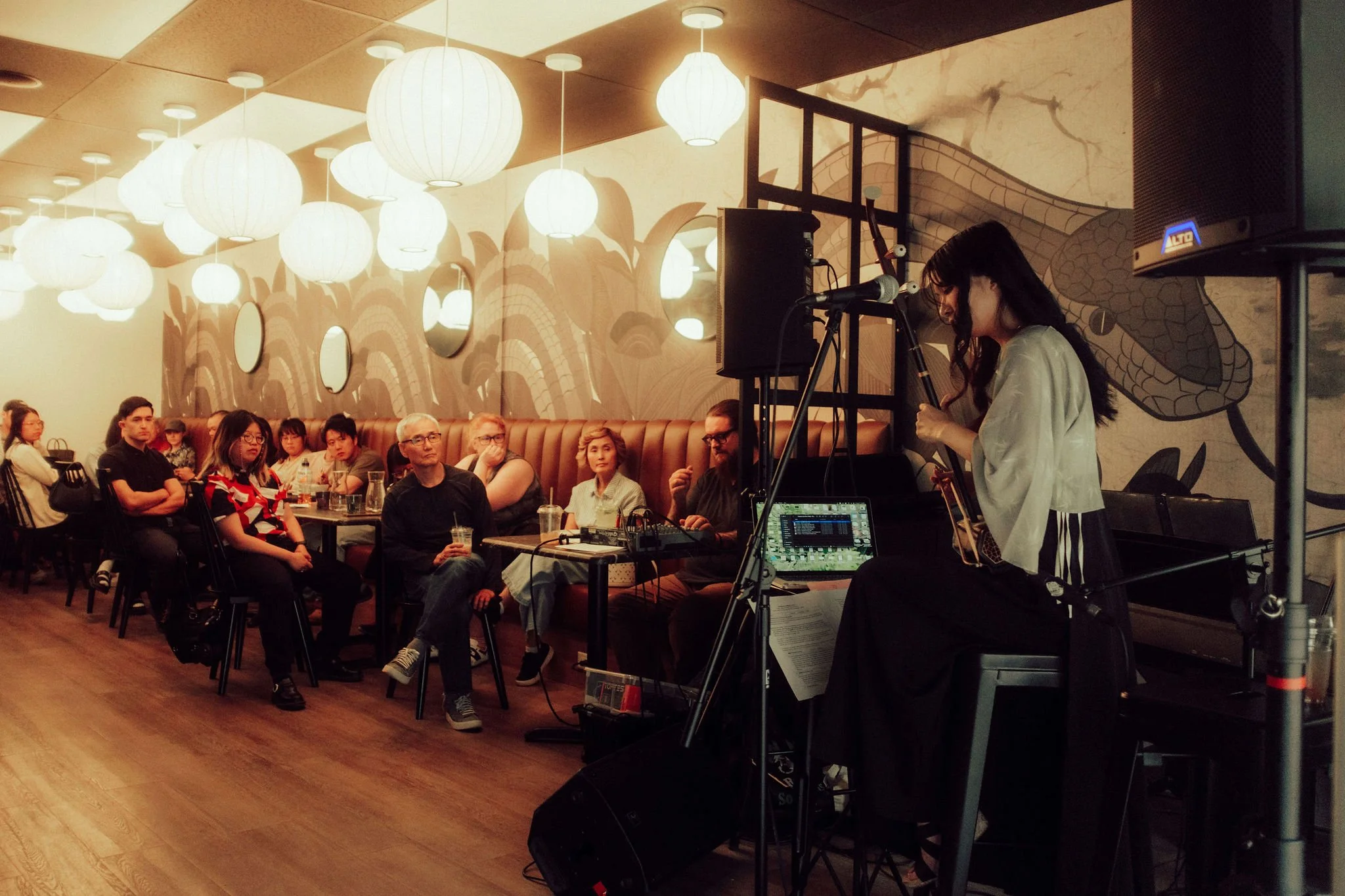
Live performance at Boa & Hare. Photo by Jordon Hon
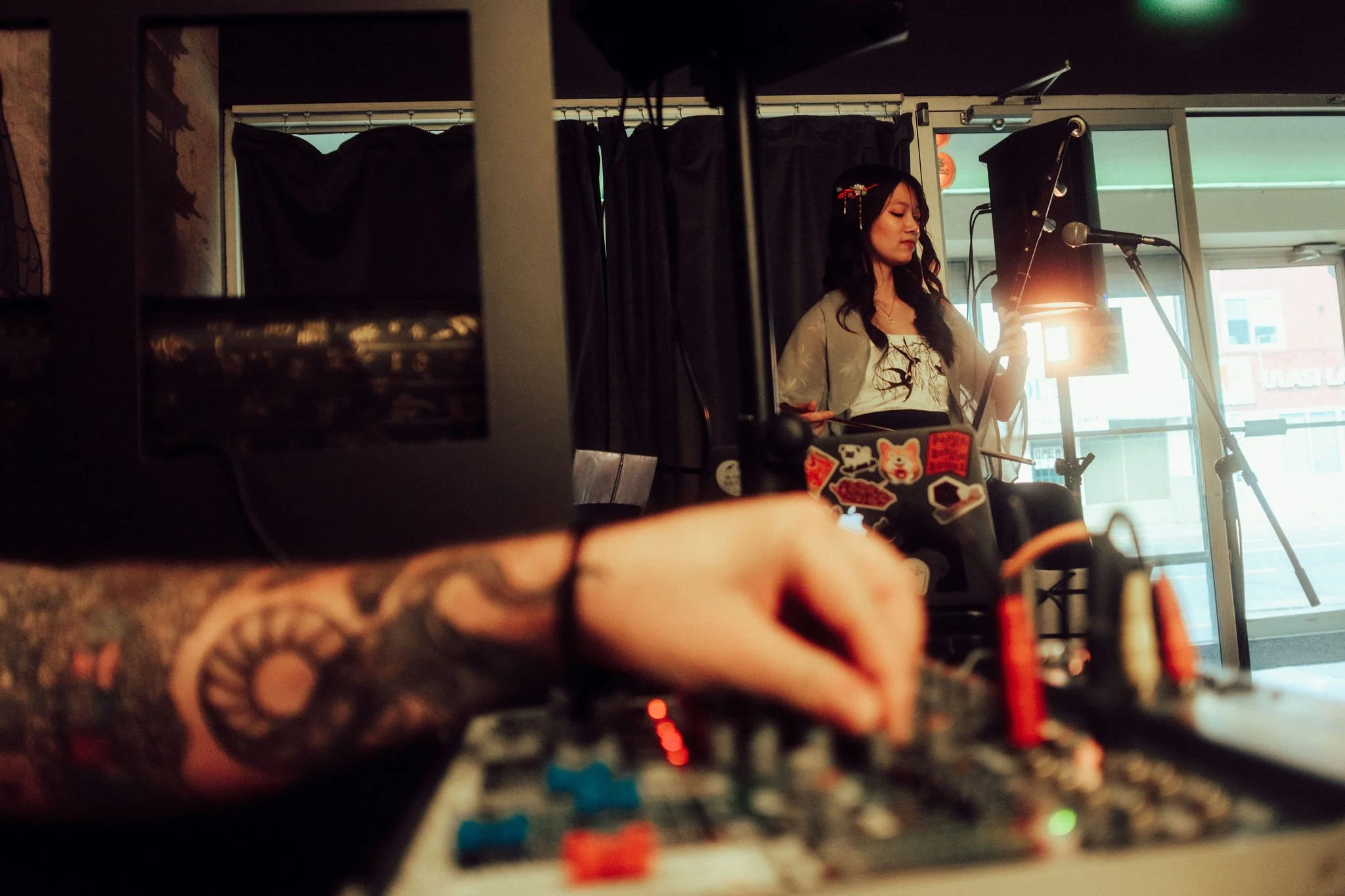
Live performance at Boa & Hare (Nanyen Lau). Photo by Jordon Hon
All of this came only AFTER Jyn-ting submitted their “final report.”
Why collect final reports before the long-term impacts can be measured?
There are so many reasons final reports get submitted long before final impacts. Asking for reports soon after a project ends is one way to protect accuracy; write it while it’s still fresh and data is easily found. Follow-up is easier as people are expecting it. Additionally, many organizations need time to review reports, summarize, and submit their final report to boards, funders or partners. Every level of reporting diminishes the time available.
So, how can you ensure your process does not stop at the final report?
Here’s what we do.
1. Have a team member dedicated to tracking impacts.
Have a team member dedicated to tracking impacts.This usually means someone reading all the final reports and identifying where informal follow-up may be valuable. For example, they recognize a project partner's name in a news article and find out a one-off event sparked a new business activity at a small bookstore 😊. For ongoing programs, having a dedicated team member review annual reports helps capture the incremental gains that are lost in a single year’s report.
2. Consider a two-part reporting process.
The first report, soon after a project ends, gets the numbers and facts unlikely to change over time. The second report makes space for unexpected and longer-term outcomes. For example, West Anthem sponsored the recent update to Rozsa Foundation’s Alberta Grant Calendar. The technical side of that project took much longer than anticipated, but West Anthem had to report to partners. So we agreed on a final report with a simpler six-month follow-up to capture impact after its launch.
3. When reasonable, offer flexibility.
Yes, this can be difficult because so often deadlines are set to give reviewers time to read and summarize a swarm of final reports. However, whenever clients or projects permit, we offer more time if asked. It’s one way to recognize that people want to meet their funding or collaborative obligations.
4. Connect informally
Tell people you want to hear from them if the project impacts continue to grow. Or put it in your calendar and follow-up with an informal phone call.
We know that effectively reporting impact is crucial to securing investment, no matter the industry. Those of us in the intermediary space (collecting and summarizing final reports) can play a big role in helping funding recipients and project partners capture and communicate their biggest impact stories.
Recognizing that report writing can be time-consuming, it also means designing a reporting process that is simple and smooth. Not as easy as it sounds. When we do that job well, we hear amazing things, all while sitting unobtrusively in the background. And it’s exactly where we and many of our clients like to be: quietly supporting and connecting local arts, culture, creators, and businesses to build vibrant communities.
Interested in learning more about our impact? Check out our Portfolio here.